Ge Ji Rui Tiejiangpu
Great ExpectationsJoe Gargery’s forge is both Pip’s workplace and a measure of how radically his sense of home and self changes. Once imagined as the road to manhood and independence, it becomes, after his encounter with Estella and Miss Havisham, a place he fears she might see him working. Yet the forge also reveals the loyalty that sustains Pip through his apprenticeship and the hostility of Orlick, Joe’s journeyman.
The Forge and Pip’s Changing View of Home
Before becoming Joe’s apprentice, Pip had pictured the forge as a promising threshold to adult life. Afterward, he found the reality of working there oppressive: the coal dust on him and the daily demands of the work seemed to weigh more heavily than the anvil. In retrospect, he describes no period as more dispiriting than the start of his apprenticeship, when his future appeared to stretch straight ahead along that newly entered road.
That change belonged to a broader estrangement from home. Joe had once made the household feel almost grand to Pip: the parlour a saloon, the front door a solemn entrance, the kitchen a respectable room, and the forge a way toward independence. Within a year, those familiar places seemed coarse and common. Pip’s shame was especially sharpened by the thought that Estella might see him at work, his face and hands marked by the forge, and despise him for it.
Work, Loyalty, and Apprenticeship
Pip does not present his perseverance as proof of his own virtue. He later says that he worked with tolerable zeal despite his dislike of the trade because Joe possessed a strong sense of industry. His faithfulness to the apprenticeship, too, came less from Pip’s own resolve than from Joe’s example. Any good that grew out of those years, he concludes, came from Joe’s plain, contented character rather than from Pip’s aspiring discontent.
The forge therefore becomes a setting for a moral contrast: Pip measures himself against the status he hopes to attain, while Joe carries on his work without abandoning his affection or duties. Though Pip remembers being miserable at the beginning of his apprenticeship, he says he never complained to Joe during the term of his indentures. He credits Joe’s influence—not an independent commitment to hard work—for the fact that he did not run away and seek another life as a soldier or sailor.
Orlick and Conflict at the Forge
The forge is also where Pip encounters Orlick, Joe’s strong, slouching journeyman, who works for weekly wages. Orlick’s dislike of Pip predates the apprenticeship; when Pip was small, he frightened him with stories about the forge and the danger of being made its fuel. Once Pip became Joe’s apprentice, Orlick appeared to resent the possibility that the boy might displace him. His hostility was indirect but persistent: he directed sparks toward Pip and sang out of time whenever Pip joined Joe in the forge song.
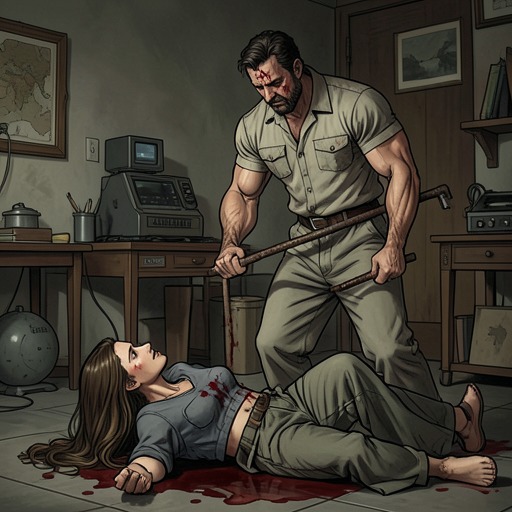
That antagonism becomes more openly threatening in a confrontation at work. When Joe declines to discuss a matter until Orlick is in a better temper, Orlick turns to the furnace, takes out a heated bar, and makes a threatening movement toward Pip before laying the iron on the anvil and hammering it. The episode makes the shared workplace a site of danger as well as training, although Joe remains the master and refuses to let the argument proceed on Orlick’s terms.
A later household episode also connects the forge and Orlick to Pip’s sister’s impaired communication. She repeatedly draws a hammer on her slate; Biddy recognizes the sign as pointing to Orlick, and he is summoned from the forge. Rather than denounce him, Pip’s sister tries to make peace with him and offers him a drink. Afterward, the hammer sign recurs, and Orlick continues to come and stand before her. The forge’s hammer thus extends beyond the work itself, becoming the sign through which the household identifies the man who has entered its daily life.
Memory, Shame, and the Forge’s Significance
Pip’s retrospective account makes the apprenticeship a turning point rather than simply a period of employment. He reflects that a single memorable day can form the first link in a chain that shapes a life; the forge is where the consequences of his changed aspirations become ordinary routine. His earlier sense of home and possibility has given way to embarrassment about the same work and people he once valued.
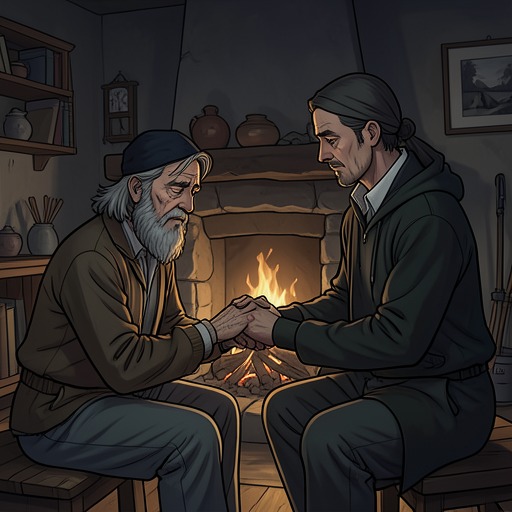
That shame, however, does not erase his recognition of what Joe gave him. Much later, after Pip’s expectations have collapsed, Joe’s tact and kindness still impress him, and he sees that his own conduct had made Joe fear being cast aside as Pip recovered. Read across these recollections, the forge stands for both sides of Pip’s development: the class-conscious dissatisfaction that estranges him from home, and the everyday example of loyalty and duty that he eventually understands he had received there.